Spirochetes
Spirochetes are gram-negative, motile, spiral bacteria, which can cause a number of serious diseases in humans including syphilis, yaws, Lyme disease, and relapsing fever. Spirochaeta, Treponema, Borrelia, and Leptospira are the examples of spirochetes genera.
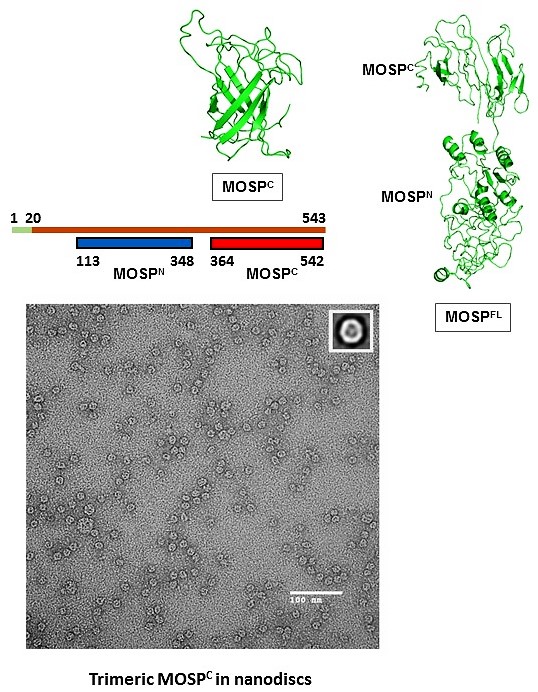
Phylogenetic analysis, however, shows that treponemes form a single cluster separate from gram negative and positive bacteria, which is further corroborated with the findings of special types of glycolipid structures in outer membrane that differ significantly from other gram negative bacteria. We are particularly interested in T. pallidum, which is a treponema agent of syphilis, and T. denticola, which has been implicated as the cause of periodontal disease. The major outer sheath protein (MOSP) is a primary virulence determinant in T. denticola, it can also be considered as the parental ortholog for the T. pallidum repeat (Tpr) family of proteins in the syphilis spirochete. In collaboration with Dr. Radolf from Uconn Health, we are performing structural and functional characterization of MOSP and several associated proteins to better understand outer membrane biogenesis in T. denticola and in spirochetes in general.